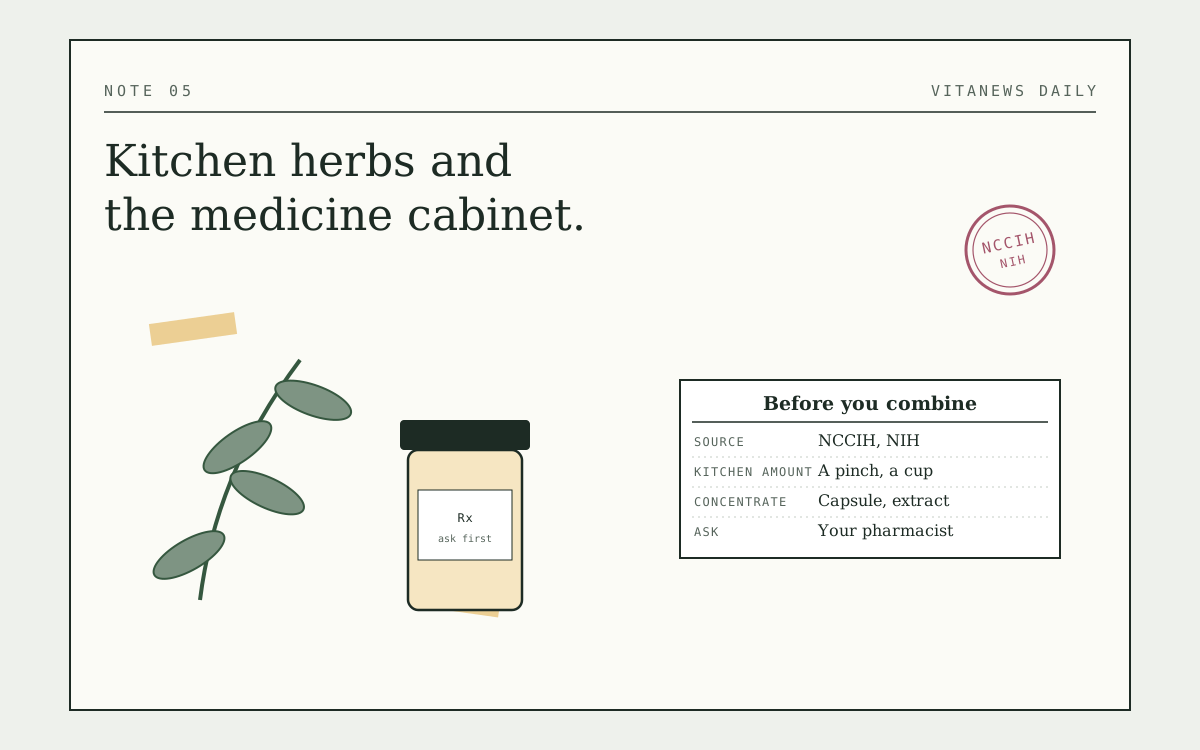
For the herbs on this site, NCCIH's fact sheets draw a consistent line: amounts commonly used in food and tea are generally described as likely safe, while larger amounts and concentrated products carry more questions. For chamomile and cinnamon, NCCIH names specific medicine-related concerns; for turmeric, ginger and peppermint it gives general advice rather than a named drug; for rosemary, hibiscus, fennel and black pepper it has no dedicated fact sheet at all. In every case, its standing advice is the same: if you take any medicine, tell your health care provider about the herbal products you use.
Kitchen amounts versus concentrated products
The same plant can reach you in very different doses. A pinch of cinnamon in oatmeal, a bag of chamomile tea, a capsule of cinnamon powder and a "highly bioavailable" curcumin supplement are not comparable exposures, and NCCIH's safety language reflects that. NCCIH describes chamomile as likely safe when taken orally in amounts commonly found in teas and other foods,[3] cinnamon as likely safe in the amounts commonly used in foods as a spice or flavoring,[4] and peppermint tea as appearing to be safe, while noting that the long-term safety of consuming large amounts of peppermint leaf is unknown.[7]
The concerns NCCIH raises tend to sit at the concentrated end. Its turmeric fact sheet, for example, singles out curcumin formulations built for higher absorption, noting that liver harm has been reported in some people who took them.[5] Germany's food-safety agency makes a parallel point about cinnamon capsules, which may contain high levels of coumarin.[11] None of this means kitchen amounts are irrelevant, but it explains why a spoon of spice and a supplement belong in different conversations with your pharmacist.
"No specific warning" is not the same as "studied and cleared." For several culinary herbs, NCCIH simply has no fact sheet, or its sheet names no particular drug. The general advice to tell your providers still applies.[1]
How herbs and medicines can affect each other
NCCIH's "Know the Science" module explains that taking supplements and medications together may have unintended effects: increasing a medication's effects, decreasing them, or interacting with the medication in harmful ways. That is why NCCIH says to talk with your health care providers about all the supplements and medications you take.[1] FDA describes the mechanism in plain terms: certain supplements can change how a medication is absorbed, metabolized or excreted, so you may end up with too much or too little of the medicine you need.[10]
For context, the herbs NCCIH's clinical digest flags most strongly are not kitchen herbs. NCCIH describes St. John's wort as having an overall high risk of drug interactions, with clinically significant interactions documented with medicines including cyclosporine, warfarin, digoxin and oral contraceptives, and describes goldenseal as having a high risk because it inhibits two major drug-metabolizing enzymes (CYP2D6 and CYP3A4).[2] Of the herbs in our cabinet, only chamomile appears in that NIH digest.[2]
Herb by herb: what NCCIH says
We read each relevant NCCIH page on September 30, 2026. Where NCCIH has no fact sheet, we say so rather than fill the gap.
| Herb (our specimens) | NCCIH fact sheet? | What NCCIH says about medicines |
|---|---|---|
| Chamomile (F-001) | Yes (German chamomile) | NCCIH: interactions with some drugs metabolized by the liver and with warfarin (a blood thinner) have been reported; there are theoretical reasons to suspect interactions with other drugs such as sedatives; preliminary studies suggest chamomile might decrease the effects of birth control pills. People allergic to related plants (ragweed, chrysanthemums, marigolds, daisies) are more likely to react.[3] |
| Cinnamon (B-001, B-002) | Yes | NCCIH: research partly funded by NCCIH found theoretical reasons to suspect some cinnamon components may interact with an anticancer medicine or with nicotine; interactions between coumarin in cassia cinnamon and the liver have been reported, mainly relevant to prolonged use by sensitive people.[4] |
| Turmeric (R-001) | Yes | NCCIH names no specific drug on the fact sheet; it gives the general advice to talk with a provider before using herbal products if you take any medicine, and flags liver reports with highly bioavailable curcumin products.[5] |
| Ginger (R-002, R-003) | Yes | NCCIH names no specific drug; general advice to talk with a provider before using ginger if you take any medicine.[6] |
| Peppermint (L-001) | Yes, focused on peppermint oil | NCCIH names no specific drug; general advice for anyone taking medicine. Peppermint tea appears safe per NCCIH; the sheet mostly covers the oil.[7] |
| Rosemary, hibiscus, fennel, black pepper (L-002, F-002, S-001, S-002) | No dedicated page in NCCIH's Herbs at a Glance series | Nothing herb-specific from NCCIH to report; its general advice on telling providers about all supplements applies.[8][1] |
Two notes on reading that table. First, NCCIH's chamomile and cinnamon statements describe reported or theoretical effects, often from preliminary research, and do not say how much tea or spice would matter; that is exactly the kind of question a pharmacist can answer for your specific medicines. Second, MedlinePlus, the NIH consumer health site, keeps an index of herbs and supplements; it notes that since July 29, 2025 the third-party database it used to carry is unavailable, and its entries for chamomile, cinnamon, ginger, peppermint oil and turmeric point readers to NCCIH's fact sheets.[9]
If you want to see how one herb is presented on a real box, the chamomile specimen and the turmeric specimen each carry an NCCIH-attributed safety note next to the label read.
Talking to a pharmacist or clinician
FDA's advice is practical: bring a list of every dietary supplement and medication you take to each appointment, including doses and how often you take them, and call your health care professional before adding a new supplement.[10] Herbal teas count; many people forget to mention them because they think of them as drinks. Useful questions to ask:
- Is there anything known about this herb and the specific medicines I take, including blood thinners, sedatives or birth control?
- Does it matter whether I use it as a spice, drink it as tea, or take it as a capsule or extract?
- Is there an amount per day, or a length of time, you would want me to stay under?
- Should I stop any herbal products before an upcoming procedure, and how far ahead?
- What would be a sign that I should stop and call you?
Surgery deserves particular mention. FDA notes that some supplements can affect medications given before, during or after surgery, and that your health care professional may ask you to stop taking supplements two or three weeks beforehand.[10] FDA also advises extra care for children and for anyone who is pregnant or breastfeeding, and asks consumers to tell their health care professional about recent illnesses or surgery.[10]
NCCIH's advice across its herb fact sheets is consistent: if you take any type of medicine, talk with your health care provider before using herbal products, because some herbs and medicines interact in harmful ways. NCCIH also reminds consumers that "natural" does not always mean "safe," that many supplements have not been tested in pregnant women, nursing mothers or children, and that anyone planning surgery should tell their providers about every supplement they take, as far in advance as possible. Do not start, stop or change a prescribed medicine on the basis of anything you read here; ask your clinician or pharmacist.[1][12]
Sources
- National Center for Complementary and Integrative Health (NCCIH), NIH. Know the Science: How Medications and Supplements Can Interact (introduction). nccih.nih.gov
- NCCIH Clinical Digest for health professionals. Herb-Drug Interactions: What the Science Says. December 2024. nccih.nih.gov
- NCCIH. Chamomile fact sheet. Last updated November 2024. nccih.nih.gov
- NCCIH. Cinnamon fact sheet. Last updated November 2024. nccih.nih.gov
- NCCIH. Turmeric fact sheet. Last updated April 2025. nccih.nih.gov
- NCCIH. Ginger fact sheet. Last updated February 2025. nccih.nih.gov
- NCCIH. Peppermint Oil fact sheet. Last updated May 2025. nccih.nih.gov
- NCCIH. Herbs at a Glance: index of herb fact sheets (checked for rosemary, hibiscus, fennel and black pepper on September 30, 2026). nccih.nih.gov
- MedlinePlus, National Library of Medicine, NIH. Herbs and Supplements index. medlineplus.gov
- U.S. Food and Drug Administration. Mixing Medications and Dietary Supplements Can Endanger Your Health. Consumer Update, content current as of June 2, 2022. fda.gov
- German Federal Institute for Risk Assessment (BfR). FAQ on coumarin in cinnamon and other foods. 27 September 2012. bfr.bund.de
- NCCIH. Using Dietary Supplements Wisely. Last updated January 2019. nccih.nih.gov
This note is educational and is not medical advice. Ask a clinician or pharmacist before using any herbal product regularly, especially if you are pregnant, nursing, have an existing condition, or take medication.