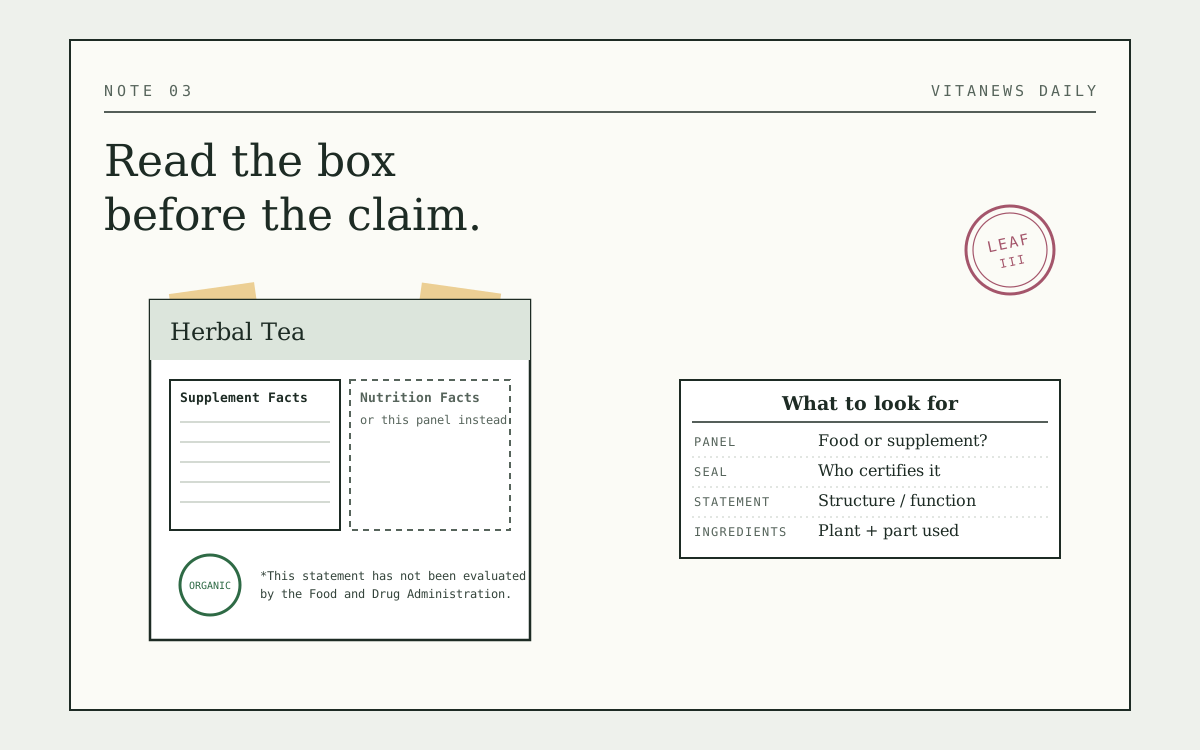
The quickest way to read an herbal tea box is to find two things before anything else: the name printed under the brand (does it say "herbal tea" or "herbal supplement"?) and the title of the facts panel on the side ("Nutrition Facts" or "Supplement Facts"). Those two details tell you which set of U.S. rules the company chose to sell under, and that in turn tells you what kinds of statements can appear on the box and what the small print means.
Food or supplement: the name on the front
Herbal teas can be sold either as ordinary foods or as dietary supplements. NCCIH describes herbal supplements as a type of dietary supplement containing one or more herbs, sold as teas, extracts, tablets, capsules, powders or in other forms.[5] FDA regulates dietary supplements under a different set of regulations from those covering conventional foods and drugs, and the companies are responsible for evaluating the safety and labeling of their products before marketing.[2] The choice shows up on the front panel.
Under FDA rules, the "statement of identity" on a dietary supplement's principal display panel must include the term "dietary supplement," except that the word "dietary" may be replaced by a description of the ingredient type, such as "herbal supplement." FDA also says a brand name is not a statement of identity.[3] So when a tea box reads "Herbal Supplement" near the net weight, the company is telling you the product is labeled and regulated as a supplement.
Our own cabinet shows both routes. The front of the Traditional Medicinals Organic Ginger box we photographed reads "Herbal Supplement," while the front of the Celestial Seasonings Chamomile box reads "Herbal Tea." Neither wording is better or worse. They are simply different legal categories, and each specimen sheet reads its own panel.
The panel on the side
FDA calls the nutrition label on a dietary supplement a "Supplement Facts" panel; foods use "Nutrition Facts." FDA's labeling guide lists several differences between the two that matter for herbs:[4]
- Part of the plant. A Supplement Facts panel must name the part of the plant a botanical ingredient comes from (root, leaf, flower and so on). A Nutrition Facts panel is not permitted to list plant parts.[4]
- Ingredients without a Daily Value. Herbs have no Recommended Daily Intake. On a Supplement Facts panel they are listed as "other dietary ingredients," by common name with an amount by weight per serving and a symbol pointing to the footnote "Daily Value not established." They cannot be listed that way on a Nutrition Facts panel.[4]
- Zero amounts. Supplement Facts panels may not list nutrients present at zero; Nutrition Facts panels must list required nutrients even when the amount is zero.[4]
- Serving size. For a supplement, one serving is the maximum amount recommended on the label per occasion, or one unit if no recommendation is given.[4] On a tea box that is usually one bag.
- Extracts. Dried extracts are listed by the weight of the dried extract; liquid extracts are listed by the volume or weight of the total extract along with the condition of the starting material (for example, fresh), and the solvent must be identified on the label.[4] Most plain herbal teas contain cut, dried plant material rather than extracts, so you will usually see a simple weight per bag.
A practical reading tip: the plant-part line is one of the most useful facts on a supplement-style tea box. "Ginger rhizome" and "chamomile flower" tell you exactly what went into the bag, and they are the details this site records in each specimen's label block.
Claims, asterisks and the FDA disclaimer
Many supplement-style tea boxes carry a short phrase on the front followed by an asterisk. That phrase is usually a structure/function claim. FDA describes these as statements about the role of a nutrient or dietary ingredient in affecting the normal structure or function of the human body; its example is "calcium builds strong bones."[1]
Three rules shape what you see:
- They are not pre-approved. FDA does not approve structure/function claims in advance. The manufacturer must have substantiation that the claim is truthful and not misleading, and must notify FDA of the claim's text no later than 30 days after marketing the product with it.[1]
- The asterisk leads to a disclaimer. On a supplement, the claim must be paired with a statement that begins "This statement has not been evaluated by the Food and Drug Administration," followed by a sentence saying the product is not intended for disease-related use. FDA explains that only a drug can legally make disease claims.[1][5]
- Food rules differ. Structure/function claims on conventional foods must focus on effects derived from nutritive value, and FDA does not require food makers to notify it or to print a disclaimer.[1] That is one reason a food-style tea box tends to talk about flavor rather than the body.
NCCIH adds a distinction worth knowing: a health claim describes a relationship between a substance and a reduced risk of a disease or condition and must be based on scientific evidence, while a structure/function claim describes maintaining the body's normal structure or function.[5] A structure/function phrase on a tea box is the company's statement. It is not a finding by FDA, and it is not a finding by us; our specimen sheets report it neutrally, attributed to the brand.
The disclaimer is not a warning that something is wrong with the tea. It is a required statement telling you that the phrase it follows was written by the company and has not been evaluated by FDA.[1]
Seals: what each one certifies
Seals answer narrow questions about how something was grown or handled. None of them says anything about what a tea does in the body. The USDA organic program is the most common on tea boxes, and it has four labeling tiers, according to USDA's Agricultural Marketing Service:[6]
| Label wording | Organic content (excluding salt and water) | USDA seal allowed? |
|---|---|---|
| "100 Percent Organic" | 100% organic ingredients | Yes |
| "Organic" | At least 95% organic ingredients | Yes |
| "Made with Organic ___" | At least 70% organic ingredients | No |
| Organic items in the ingredient list only | Less than 70% | No; "organic" may not appear on the front panel |
USDA adds that organic product labels must be reviewed and approved by a USDA-accredited certifying agent, and that organic production excludes methods such as genetic engineering, ionizing radiation and sewage sludge.[6]
Other marks are separate programs with their own rules, and one does not imply another:
- Non-GMO Project Verified is an independent verification mark, not a USDA organic seal. The Celestial Seasonings chamomile box we photographed carries this mark on the front; the Traditional Medicinals ginger box carries the USDA Organic seal.
- Kosher symbols come from kosher certification agencies and concern religious dietary law.
- "Caffeine free" is a composition statement, not a certification. Most herbal teas contain no tea leaf (Camellia sinensis), which is where caffeine in "real" tea comes from.
- Words like "standardized," "verified" or "certified" used by a manufacturer on their own do not necessarily guarantee quality or consistency, according to NCCIH.[5]
A one-minute label check
With a box in hand, these are the lines worth reading, in roughly the order they appear:
- Statement of identity: "herbal tea" (food) or "herbal supplement" (supplement).
- Facts panel title: Nutrition Facts or Supplement Facts, and the serving size.
- Ingredients and plant parts: which plants, which parts, and whether flavorings or other herbs are blended in.
- Net weight and bag count: useful for comparing prices per bag.
- Any asterisked phrase and its disclaimer: read it as the company's statement.
- Seals, read literally: each one certifies a single thing.
- Directions and cautions: steeping instructions and any "ask your health care provider" statement printed by the brand.
NCCIH reminds consumers that "natural" does not always mean "safe," that many dietary supplements have not been tested in pregnant women, nursing mothers or children, and that some supplements can affect the risk of bleeding or the response to anesthesia, so people planning surgery should tell their health care providers about everything they take, as far in advance as possible. If you use a product labeled as a supplement, NCCIH advises following the label instructions and, if side effects occur, stopping and contacting your health care provider. Ask a clinician or pharmacist before drinking any herbal tea regularly if you take medication.[5]
Sources
- U.S. Food and Drug Administration. Structure/Function Claims: definitions, notification, disclaimer requirements for dietary supplements, and the rules for conventional foods. Content current as of March 28, 2024. fda.gov
- U.S. Food and Drug Administration. Dietary Supplements: overview of FDA's oversight under the Dietary Supplement Health and Education Act of 1994. Content current as of October 1, 2024. fda.gov
- U.S. Food and Drug Administration. Dietary Supplement Labeling Guide, Chapter II: Identity Statement. April 2005 guidance. fda.gov
- U.S. Food and Drug Administration. Dietary Supplement Labeling Guide, Chapter IV: Nutrition Labeling (Supplement Facts versus Nutrition Facts). April 2005 guidance. fda.gov
- National Center for Complementary and Integrative Health (NCCIH), NIH. Using Dietary Supplements Wisely: definitions, federal regulation, health and structure/function claims, and safety considerations. Last updated January 2019. nccih.nih.gov
- USDA Agricultural Marketing Service. Labeling Organic Products: the four organic labeling categories and certification requirements. ams.usda.gov
This note is educational and is not medical advice. Ask a clinician or pharmacist before using any herbal product regularly, especially if you are pregnant, nursing, have an existing condition, or take medication.